
Checking for a Warrant in Fayette
Fayette posts no public warrant database for the city, so go straight to the agency named on the citation, notice, or old case paper. The Fayette Police Department handles police matters, and the Fayette Municipal Court keeps the city ordinance and municipal traffic dockets. The county magistrates page tells anyone who suspects a warrant to appear in person at the Sheriff's Department or a municipal police department. Bring a full legal name and date of birth. Add the case or ticket number and the date of the missed setting when known. Those details let staff find the right docket and tell two people with similar names apart. Ask which court issued the warrant, what its current status is, and what the judge requires next.
- Read the issuing agency and court on the ticket or notice.
- Contact Fayette Police for a city police matter.
- Ask Fayette Municipal Court about its case and any required appearance.
- Use the Fayette Sheriff and county magistrate route for county matters.
- Confirm resolution with the issuing court and seek legal advice when needed.
Fayette Police or Warrant Court?
Police records and court records answer different questions. Fayette Police may hold an incident report or details on how a warrant was served. Municipal Court keeps the city docket, the court settings, payment history, and every order the judge has entered. A police employee cannot promise that a court order was recalled. A receipt alone does not show that a judge withdrew a warrant either. The city lists Fayette Police at 118 1st Avenue NE, Fayette, Alabama 35555, with 205-932-5312 as its public number, and 911 for emergencies and night calls. Municipal Court sits separately at 203 Temple Avenue North. Contact the office that owns the record, then ask which other office must confirm current warrant status in Fayette.
Fayette Police Department
Police contact and service-record route
205-932-5312
Fayette Municipal Court
City docket and warrant-order route
205-932-5367 ext. 4
Fayette Police and Municipal Court
Fayette Municipal Court hears violations of city ordinances and municipal traffic cases. Its official page names Steven Nolen as judge and Celeste Kennard as clerk. It warns that failing to appear or pay by the court date can bring a suspended driver license and a warrant. That warning alone is reason to call the clerk quickly after a missed date in Fayette. The office keeps weekday hours of 8:00 a.m. to 4:00 p.m., and court is generally held on the first and third Tuesdays at 4:00 p.m. Holidays can shift a setting. Confirm the live calendar and ask whether the person must appear, may pay, or needs a new date. The court email is fayettemc@fayetteal.org. No Fayette city page offers a public warrant-name search.
Fayette Warrant Schedule Checks
Check any missed date against the municipal docket. The first-and-third-Tuesday pattern gives context, but it does not fix one person's actual case date. A citation, mailed notice, reset order, or clerk confirmation controls the real duty in Fayette. Holidays can also alter the usual schedule. If a date may have passed, keep the ticket or case number ready. Ask whether the docket shows a failure to appear, whether a warrant was issued, and whether a judge must approve a recall. Ask too if a license-suspension notice went out. Those are separate status points, and paying a balance may not settle all of them.
Missed a Fayette setting? Contact Municipal Court before traveling or paying online, and ask what action the judge requires in that exact case.
Fayette Warrant Types
The type of Fayette warrant follows the event and the court. A city traffic or ordinance case stays with Municipal Court. A felony goes the county magistrate, District Court, and Circuit Court route. Alabama calls an arrest order based on failure to appear an alias warrant. A capias is another order directing that a person be taken into custody.
| Warrant Type | How It Arises | Who Issues It |
|---|---|---|
| Traffic warrant | Missed city traffic date or unresolved citation | Fayette Municipal Court |
| Ordinance warrant | Failure to answer a city-code case | Fayette Municipal Court |
| Alias or bench warrant | Failure to appear or obey a court order | The issuing judge |
| Arrest warrant | Probable cause for a criminal charge | Magistrate or county court |
Fayette Payment Is Not Warrant Clearance
Fayette Municipal Court takes cashier's checks or money orders by mail and offers a city-linked online payment route. The city says online card or debit payments carry a third-party fee of 3.5 percent or $3.00. Those channels pay eligible balances. They are not public warrant-status searches. Before paying anything, confirm the case is eligible and ask what the payment actually changes. The court may still require an appearance, a new setting, or a judge's recall order. Recall means the court withdraws its outstanding warrant. A web receipt only proves money was submitted, not that all court action is finished. The city-linked payment entry shows the payment path Fayette uses.
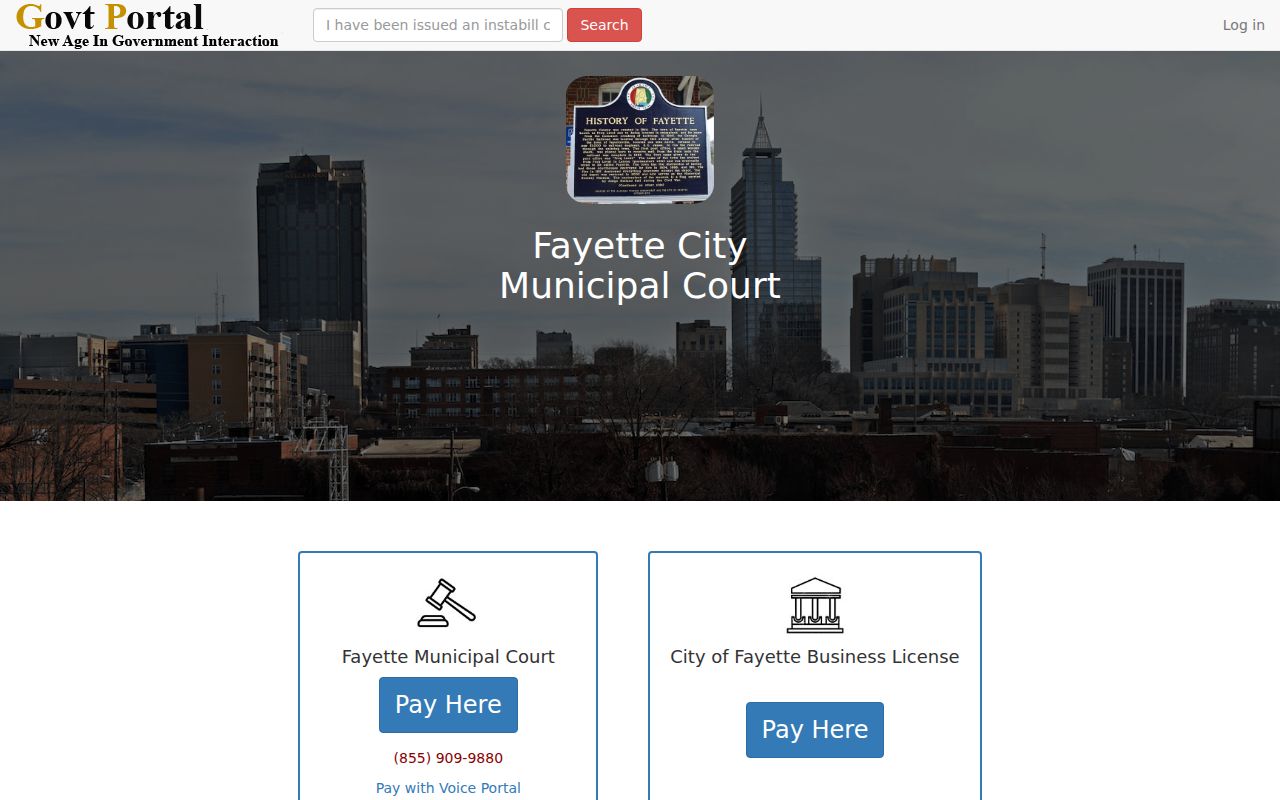
The screen is useful for payment access, but it is not a warrant-clearance certificate.
Inside a Fayette Warrant Record
Read a served warrant or docket entry field by field. The cause number ties the order to one court file. The name identifies the person, and the charge states the alleged basis. The issuing court is who can answer status and recall questions on a Fayette warrant. Bond or fine data can change, so verify it with the clerk.
| Warrant / Cause Number | The exact court identifier printed on the record |
|---|---|
| Subject Name | The legal name, checked with birth date when staff permit |
| Charge / Offense | The alleged offense or missed duty |
| Issuing Court | Fayette Municipal Court or the named county court |
| Bond / Fine Amount | A current amount that needs direct confirmation |
| Status | Active, served, recalled, or disposed as the docket states |
Fayette Citation or County Warrant?
The issuing line on the paper is the best clue. A citation from Fayette Police usually means Municipal Court. A county Uniform Traffic Ticket and Complaint can point to District Court and state-linked traffic routes instead, and the county magistrates page fills the gap: misdemeanors charged outside municipal police jurisdiction follow the county route. Serving as county seat does not fold city misdemeanors into county court. Fayette County court may take a city misdemeanor only when it joins a felony or an extraordinary circumstance applies. So get two names from staff. Get the filing court, and get the serving agency on the Fayette case. That keeps the request out of an office that does not control the warrant.
| Clue | City route | County route |
|---|---|---|
| Issuing agency | Fayette Police | Sheriff or county agency |
| Court named | Municipal Court | District or Circuit Court |
| Status source | Municipal clerk | Circuit Clerk or magistrate |
How Fayette Warrants Fit the County System
A Fayette warrant from city court starts as a municipal case, yet other agencies may help serve it. The county courts hold separate criminal and traffic files. The Sheriff handles service of county warrants. Alabama keeps wanted-person records for law enforcement, and ALEA's public fugitive search is only a selective list rather than a full warrant register, so no public county database exists.
Warrant flow: Fayette Municipal Court / Police › Fayette County Sheriff › ALEA/NCIC law-enforcement systems
For the wider picture, the Fayette County warrant records overview maps the larger jurisdiction. For anything binding, the issuing court has the final word on recall, bond, and the next hearing.
Fayette City Code Warrant Authority
The official Fayette municipal code supplies the local authority picture. Chapter 12, sections 12-9 and 12-10, cover the powers of the municipal judge and magistrate over warrants and bail. That is why a judicial officer, not a police employee alone, controls issuance and court action. Read it for roles, not live facts. It is not a bond schedule. It cannot tell you whether a named order remains active. For that, ask the clerk about the current case. Bail is the security set for release under court terms. Bond is the promise or financial instrument that meets those terms, and the amount and accepted method depend on the case.
- Issue
- A judge or magistrate authorizes the warrant.
- Serve
- An officer executes the order and gives notice.
- Recall
- The court withdraws the outstanding warrant.
- Return
- The officer records how the warrant was handled.
Fayette Warrant Records and Public Access
Alabama law lets the public inspect and copy many writings, within lawful limits. Fayette's magistrates page adds one crucial rule: an arrest warrant is not public until served. Juvenile and sealed material may also be withheld, so an empty web search proves nothing about whether a warrant exists. Ask for a precise item instead. A served warrant, return of service, docket entry, or recall order can each be requested. The public-record procedure may use a standard form, a named designee, and set request methods. A narrow request routes more easily than a broad demand for everything tied to a name.
Key Rules:
Alabama Open Records Act, §36-12-40 gives the inspection and copying rule, subject to restrictions.
Alabama Code §36-12-45 addresses request procedures, forms, and custodians.
Alabama Code §15-7-4 states core contents of an arrest warrant.
Resolving a Fayette Warrant
Once an official office confirms a Fayette warrant, ask which court issued it and what action that court accepts. The answer may be a court appearance, a reset, payment of an eligible balance, bond, or advice from an attorney. Never settle an active order through an unofficial service. A left message does not stop enforcement. Bring the case number, photo identification, and receipts when staff direct an in-person visit. Ask whether a judge must sign a recall and when the docket will show it. If arrest is possible, legal advice can help plan a safe voluntary appearance. The Circuit Clerk cannot give legal advice or recommend counsel. The county court site does link to referral and legal-aid resources. Keep written confirmation. A payment receipt, a recall order, and an updated docket each prove a different step in resolving the warrant.
Fayette Warrant Status Follow-Up
A sound follow-up checks more than one word on a screen. Ask whether the Fayette warrant is active, served, recalled, or disposed, and when that status was entered. "Served" means an officer executed the order. "Recalled" means the issuing court withdrew it. A disposed case may still carry a separate balance or record entry that needs explanation. Write down the office, staff role, date, and cause number behind each answer. Next, match every document to its source. Police may explain service. Municipal Court confirms its own docket and judicial orders. A county case belongs with the Circuit Clerk for the court record, while the Sheriff can address service information. Do not merge those answers into one claim unless the issuing court confirms it. That discipline matters most when an old receipt, a missed notice, and a later court order all sit in the same Fayette file. Finally, ask what written proof will show completion. A receipt proves payment. A recall order proves a judicial act. A docket entry may show the new setting, so keep all three and make sure the mailing address on file is current so later Fayette court notices arrive.
Fayette Warrant Contact Screens
The official Fayette Police page lists the city police contact for incident and service questions.
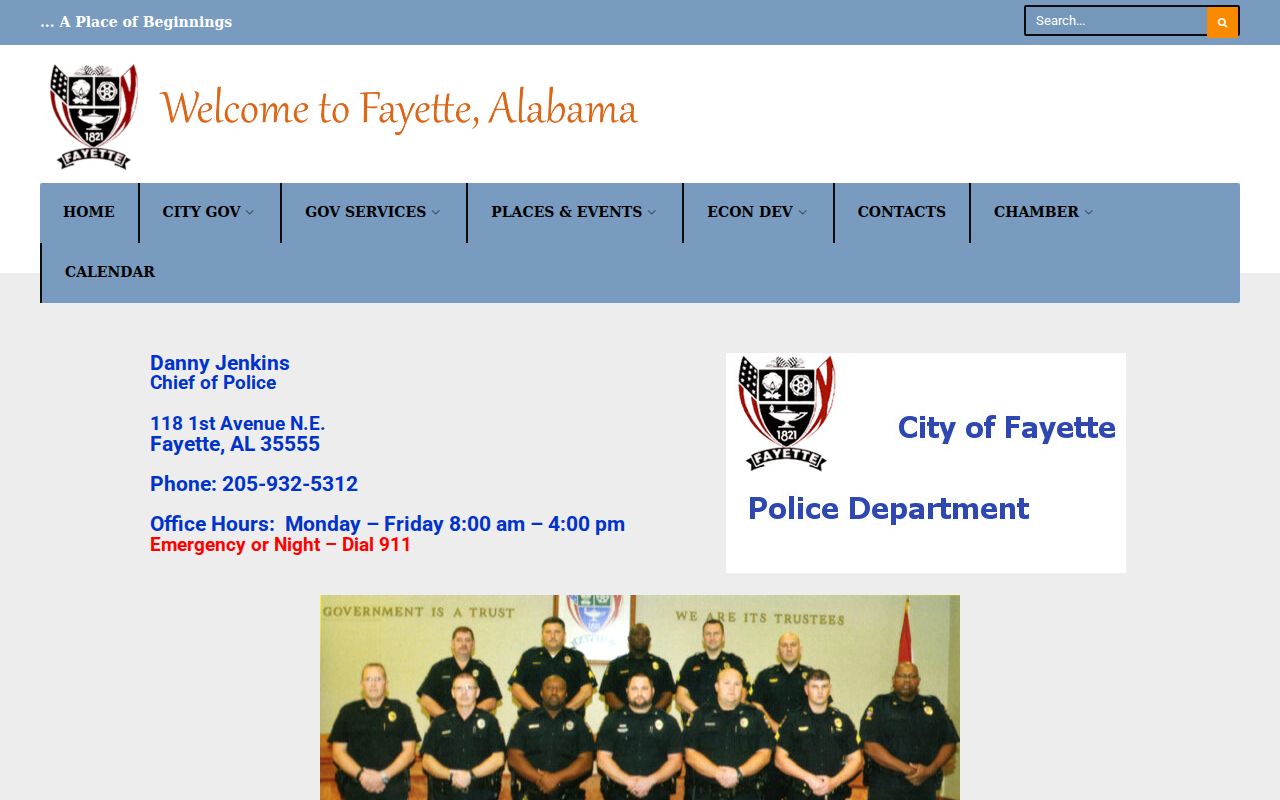
That police contact helps route a city matter, but the issuing court still controls the judicial order. The official Fayette Municipal Court page publishes the court contact, schedule, payment methods, and failure-to-appear warning.
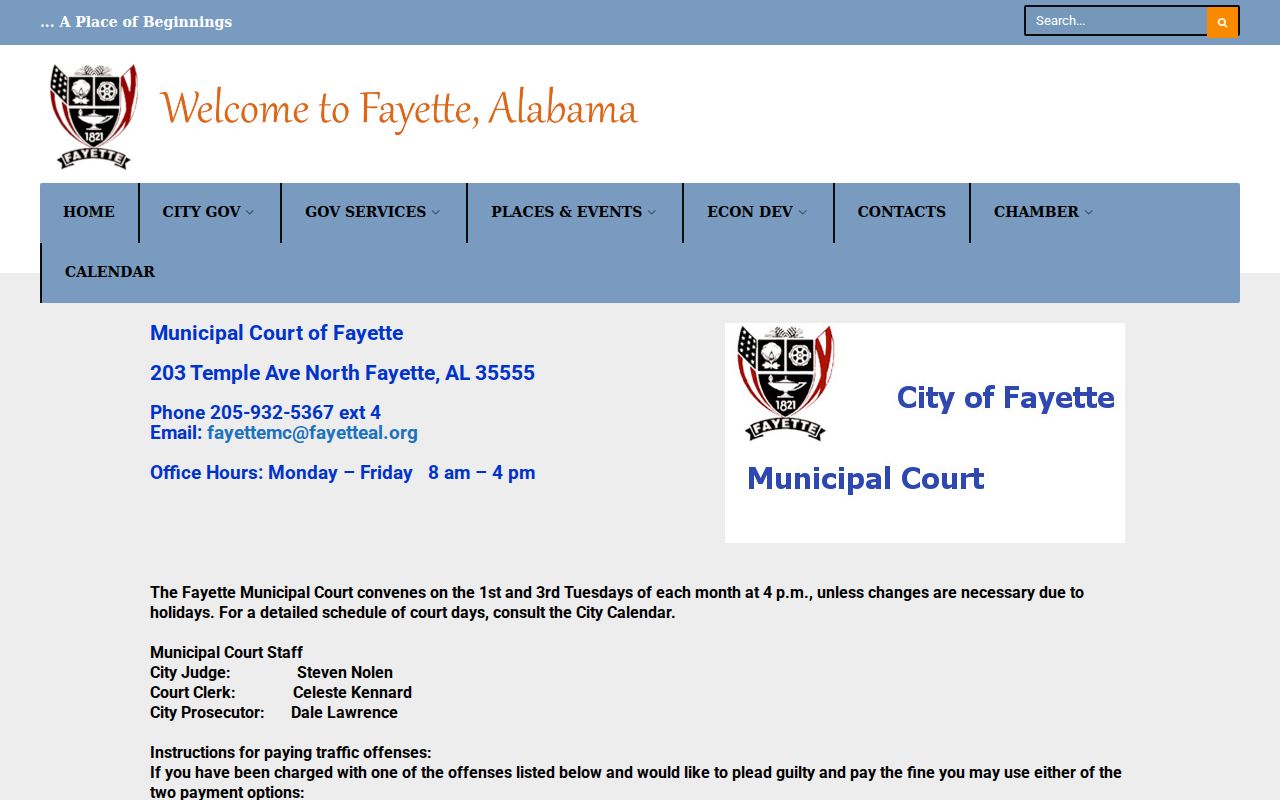
The Fayette court page posts its warnings and payment details, which makes it the right stop for a city case. Still, only the clerk can confirm live warrant status.